What Single-Ply Roofing Is
Before comparing TPO and EPDM, it helps to understand the category they belong to. Single ply roofing is a family of systems that share a basic approach to covering a flat or low slope roof, and that approach is a big part of why these systems have become so common. Here is what single ply roofing is and why it dominates commercial buildings in Carthage.
One Layer, One Continuous Surface
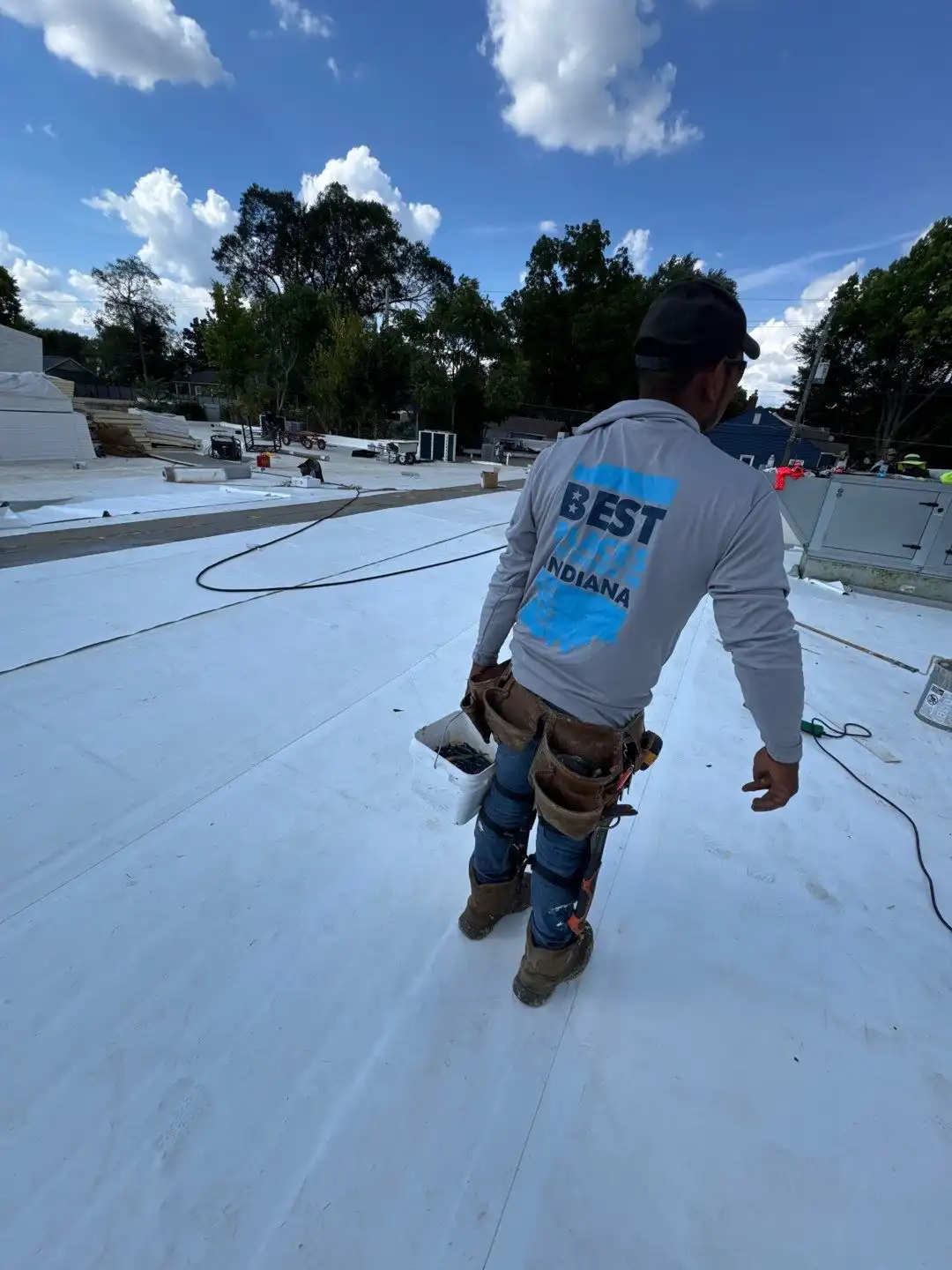
Single ply roofing means the roof is covered by a single layer of engineered membrane rather than the multiple built up layers of older systems. Large sheets of the membrane are rolled out and joined to create one continuous waterproof surface across the roof. This single layer design is simpler than the multi ply roofs it largely replaced, and it performs reliably when installed correctly. For a Carthage commercial building, that continuous membrane is what keeps water out, and the simplicity of a single layer contributes to both faster installation and dependable performance. The whole system is built around that one protective surface doing its job over the long haul.
The Three Main Membranes
Three membranes dominate single ply roofing, TPO, EPDM, and PVC. TPO and EPDM are the two most common, while PVC fills specialized roles like restaurants and chemical exposed buildings. TPO is a reflective thermoplastic with welded seams, EPDM is a durable rubber membrane with a long history, and PVC offers premium chemical resistance. Each has its strengths and ideal applications. For a Carthage building, the choice usually comes down to TPO or EPDM, with PVC reserved for buildings that specifically need its chemical resistance. Understanding that these are distinct materials, not interchangeable versions of the same thing, is the first step toward choosing the right one for your conditions.
Built for Flat and Low-Slope Roofs
Single ply systems are designed for the flat and low slope roofs common on commercial buildings, where water tends to sit rather than run off quickly. The continuous membrane and its joined seams create a watertight surface suited to those conditions, where a roof that resists standing water is essential. Pitched residential roofs use shingles, and flat commercial roofs use membranes, because the material has to match the geometry. For a Carthage commercial building with a flat or gently sloped roof, single ply provides the kind of waterproof surface the situation demands, holding up where water lingers and weather works on every seam day after day across the seasons.
Lighter and Faster to Install
Compared to older built up and multi layer systems, single ply roofs are lighter and faster to install, which brings practical advantages. A lighter roof puts less load on the structure, and faster installation means less disruption to the building and its operations during the work. The efficiency of rolling out membrane sheets and joining them, rather than building up multiple layers, is a real benefit on large commercial roofs. For a Carthage business, that faster installation can translate into a quicker project and less interruption to your operations. It is one of the practical reasons single ply systems displaced the heavier, slower methods that came before them on commercial buildings.
How Seams Are Joined
The seams where membrane sheets meet are joined differently depending on the system, and this is one of the key distinctions among single ply types. Thermoplastic membranes like TPO are heat welded, with the edges melted and fused into a continuous bond. EPDM, a rubber membrane, is typically seamed with adhesives or specialized tape. The seam method affects both durability and how the roof is repaired. For a Carthage building, understanding how a given system handles its seams matters, since seams are a common leak point on any roof. The way a membrane is joined is a meaningful part of how it performs and how long it stays watertight.
Why Single-Ply Took Over Commercial Roofing
Single ply systems became the standard for commercial roofing because they combine dependable waterproofing, durability, efficient installation, and reasonable cost. They solved the weight, complexity, and labor demands of older systems while delivering long service lives. The result is a category of roofing well matched to the needs of modern commercial buildings, which is why you find single ply membranes on so many of them. For a Carthage owner, that widespread adoption means proven, well understood systems with refined installation methods and a clear track record. Single ply roofing earned its dominance by working reliably across countless buildings, which is exactly the kind of track record worth relying on for your own roof.
A Category Built for Commercial Buildings
Single ply roofing covers a flat or low slope roof with one continuous membrane, comes mainly as TPO, EPDM, or PVC, installs efficiently, and lasts. Understanding the category clarifies why these systems dominate commercial roofing and sets up the real decision, which membrane fits your building. That choice is where the value of single ply roofing is either captured or missed on a Carthage building.
One point worth stressing about single ply roofing is that the choice between TPO and EPDM is rarely as important as the quality of the installation behind it. A Carthage building owner can pick the best membrane on the market, but if the seams are sealed poorly or the flashings are detailed carelessly, the roof will leak regardless. This is why the contractor matters as much as the material, and why insisting on an experienced installer with a verifiable track record is so important. Carthage Commercial Roofing brings crews trained on both TPO and EPDM, because we have seen firsthand that workmanship is what separates a roof that lasts decades from one that becomes a recurring headache.
Find the Right Single-Ply System for Your Roof
Wondering which single ply system suits your Carthage building? Call Carthage Commercial Roofing at (765) 676-3491 for a free inspection and an honest assessment. We install and repair all the major systems, so we will help you find the one that genuinely fits your building and conditions.