The Logistics Warehouse on the Southside
A 60,000 square foot distribution facility called us during a February ice storm. The night shift supervisor noticed water dripping onto a pallet of cardboard packaging near the loading docks. By the time we arrived, three ceiling tiles had collapsed and roughly 40 cases of product were soaked. The roof was a 14 year old TPO membrane, and the failure point was a split seam near a rooftop HVAC curb where ice had been pooling for days.
Our crew got up there with headlamps, a propane torch, and a roll of compatible TPO patch material. The split was about 18 inches long. We dried the membrane with absorbent pads, heat welded a patch, and confirmed the seam held under a soap test. Total emergency repair cost the owner about $1,850, including the after hours rate. The inside damage, handled by our commercial water restoration team, ran another $6,200 because the wet cardboard had wicked moisture into a wood pallet stack. Lesson: the roof repair was cheap. The interior cleanup was not. Speed mattered.
What we did not bill for, but probably should have, was the hour spent walking the rest of the roof with the facilities manager. We flagged four more curbs showing the same ice damming pattern and recommended he add electric heat trace cable before the next freeze. He did. That building has not called us back for an ice related leak since.
The Restaurant on Main Street
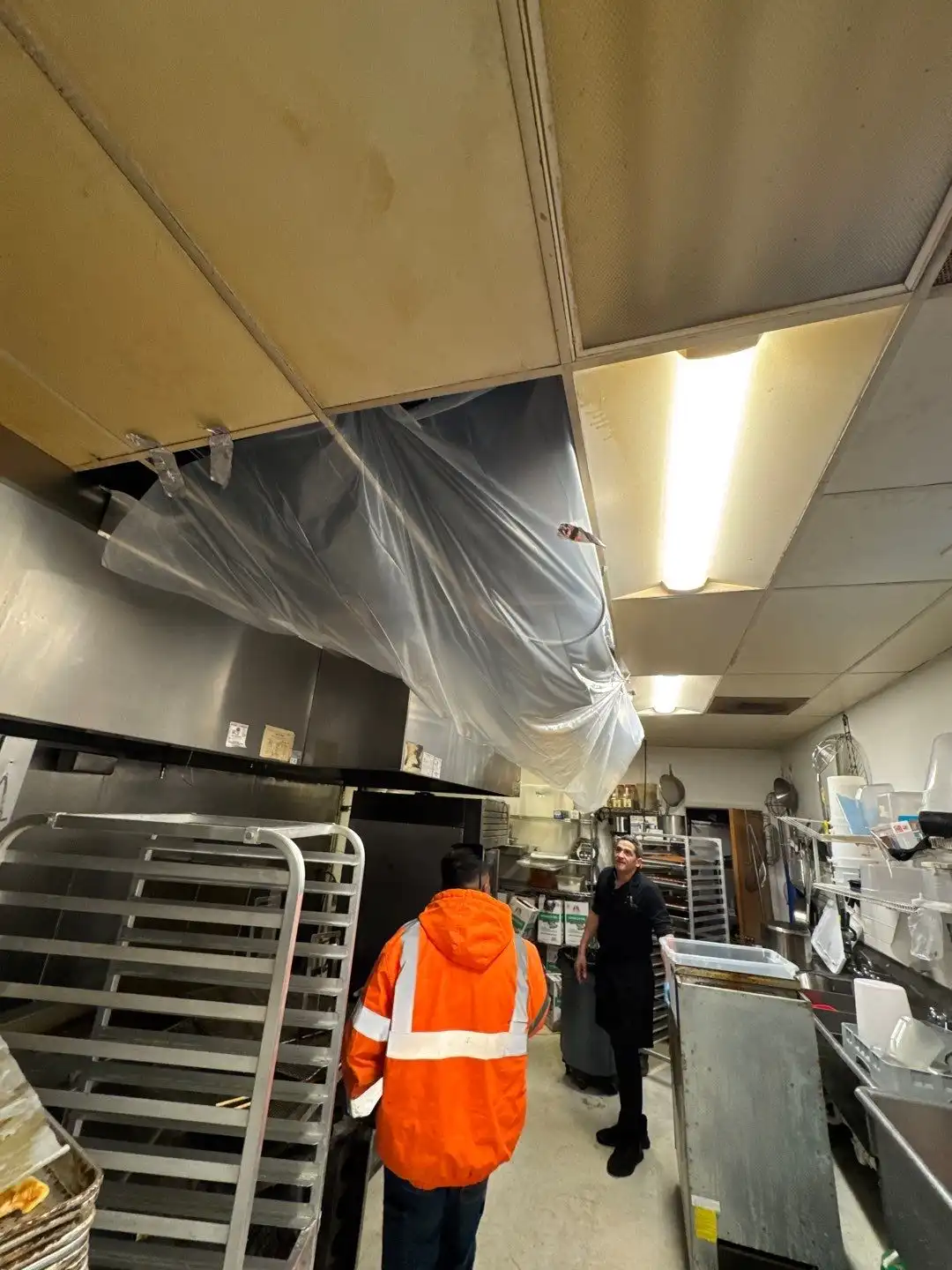
A breakfast spot owner called us at 4:47 a.m. on a Saturday. Water was running down the wall behind the prep line. He had a full reservation book starting at 6:30. We assessed severity over the phone, asked him to kill power to the affected outlets, and dispatched a two person crew. The roof was modified bitumen, about 20 years old, with multiple prior patches. The leak source was a rusted through metal flashing around an old grease vent that had been abandoned but never properly sealed.
We dry tarped the area, cut out the failed flashing, installed a new collar, and sealed it with self adhered membrane. The owner opened at 7:15, 45 minutes late. The repair held, but we told him directly: his roof has maybe two more years before the substrate gives up. He scheduled a full commercial roof replacement for the following fall. We respected that he wanted the truth, not a sales push.
The Church With a Steeple Drip
An older sanctuary called us because water was dripping near the pulpit during a Wednesday rehearsal. The roof was standing seam metal, about 18 years installed, and the failure was at a sealed penetration where a lightning rod cable entered the structure. The butyl sealant had finally cracked.
We cleaned the joint, applied a fresh urethane sealant rated for metal, and added a small storm collar. Repair was $675. The trustees asked us to schedule a full commercial roof inspection for the rest of the building. We found two more aging penetrations and quoted preventive sealing at $1,400. That is the better way to spend money: before the next emergency call.
What You Should Do Tonight If You Are Reading This During a Leak
- Move product, electronics, and paperwork away from the active drip and protect the floor with plastic and buckets.
- Kill power to affected circuits if water is near outlets or fixtures.
- Take photos and videos with timestamps before anything is moved or cleaned.
- Call us. We will assess severity on the phone and prioritize tarping or dry in for active leaks.
The Strip Mall After a Hail Event
A June hailstorm hit a section of Carthage hard. We responded to a six tenant strip center where one bay (a dry cleaner) had visible interior leaks. The EPDM roof was 11 years old and had taken roughly 1.5 inch hail. We found 14 distinct impact bruises, three of which had punctured through. Two larger areas were spongy underfoot, indicating saturated insulation.
We tarped the active leak zones, documented every impact with photos and chalk circles for the insurance adjuster, and helped the owner file. The carrier approved a partial replacement over the dry cleaner bay plus spot repairs across the rest. Final approved scope was about $48,000. Our emergency tarping that night cost $2,100, which the carrier reimbursed. If you want the deeper version of that workflow, our piece on storm damage water restoration and flood cleanup walks through documentation step by step.
One detail worth repeating from that job: the adjuster told us afterward that our chalk circle documentation cut his inspection time roughly in half and made the claim cleaner to approve. Two of the other five tenants in that strip later called us directly because they watched how the dry cleaner's claim went. That is how Carthage Commercial Roofing ends up working on the same block for years.
What These Calls Cost, Roughly
Across the dozens of emergency commercial roof calls we run each year in Carthage, the spread looks like this. A tarp and dry in only job typically runs $800 to $2,500. A single seam or flashing repair lands somewhere between $1,500 and $4,000. Multi point storm repairs commonly fall in the $4,000 to $12,000 band. A partial section replacement, when the insulation is gone or the deck is compromised, ranges from $15,000 up to $60,000 depending on square footage and access. These ranges reflect typical Central Indiana commercial jobs, and actual price depends on membrane type, access, and interior damage scope.
The number that surprises owners most is not the repair itself. It is the interior cost. Soaked drywall, ruined inventory, mold remediation, and downtime almost always exceed the roof bill, sometimes by a factor of three or four. That is why we push tarping and dry in as the first move on any active leak, even before we know the full repair scope.
The Medical Office That Did Not Need a Roofer
A clinic manager in Carthage called convinced her roof was leaking into an exam room. Stained ceiling tile, water on the floor, the whole picture. When we got up on the roof, the membrane was tight. No ponding, no punctures, no failed flashings. The culprit turned out to be a condensate drain line from the rooftop AC unit that had backed up and overflowed into the building through the curb penetration.
We told her she needed a plumber and an HVAC tech, not us. No charge for the inspection. She has called us three times since for unrelated buildings in her portfolio. Honest calls build long relationships.